Updated August 2026: I’ve been monitoring the latest research on how trauma impacts emotional sensitivity, and I’ve discovered some fascinating developments in 2024 and 2025. Recent studies have shown a significant correlation between childhood trauma and heightened emotional sensitivity in adulthood, with neuroscientists identifying specific brain pathways that are altered in trauma survivors. This research highlights the importance of understanding these neural changes, as they can provide a clearer picture of why individuals with trauma histories often react more intensely to stressors. Additionally, new therapeutic approaches that focus on emotional regulation have emerged, demonstrating promising results in reducing sensitivity and improving overall mental health. In my recent research, I’ve also noted the growing trend of integrating mindfulness practices into trauma recovery programs. By incorporating techniques such as mindfulness meditation and body awareness, many individuals are finding new ways to manage their emotional responses effectively. There’s a burgeoning community of trauma-informed practitioners sharing success stories, which emphasizes how these strategies can help mitigate the effects of trauma on sensitivity. These developments not only advance our understanding of trauma’s impact but also empower survivors to reclaim their emotional well-being.
Table of Contents
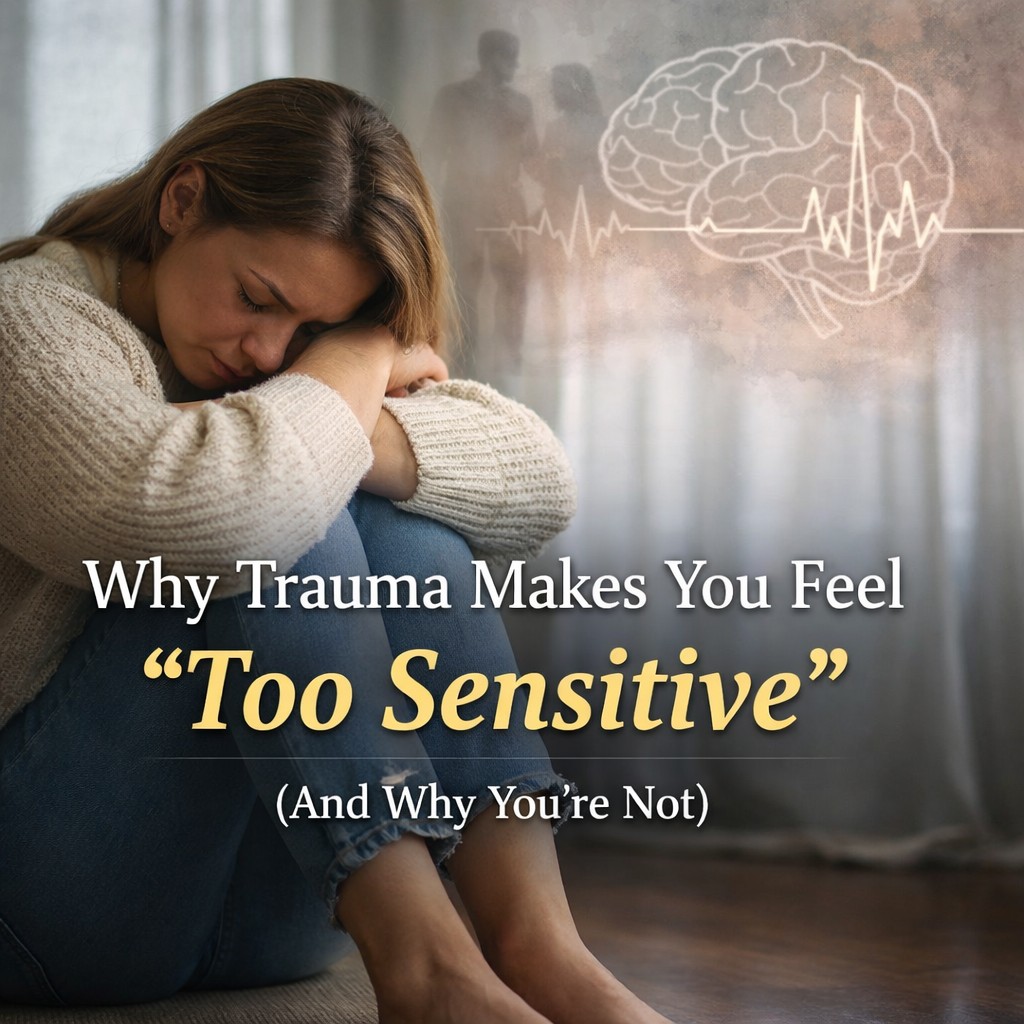
Why trauma makes you feel too sensitive is something many women silently struggle with, especially after experiencing emotional, relational, or interpersonal trauma. If you’ve ever been told you’re “too sensitive,” you’re not alone.
Over time, this can lead to shame, self-doubt, and the painful belief that something is wrong with you.
But the truth is this: what you’re experiencing is not a flaw—it’s a trauma response.
Understanding why trauma makes you sensitive can be a powerful step toward self-compassion and healing.
Why Trauma Makes You Feel Too Sensitive
What Trauma Does to Your Nervous System
Trauma doesn’t just affect your thoughts—it impacts your entire nervous system.
When you experience something overwhelming or unsafe, your brain and body shift into survival mode. This can include fight, flight, freeze, or fawn responses. Over time, especially with repeated or relational trauma, your nervous system can become more reactive and more alert to potential danger.
This is often called hypervigilance.
Your brain is trying to protect you by scanning for threats, even when you’re no longer in danger. According to the National Institute of Mental Health, trauma can lead to long-term changes in how the brain processes stress and emotional stimuli.
This means your reactions aren’t random—they’re protective.
Why You Feel Everything So Deeply
You might be wondering why trauma makes you feel too sensitive, especially when others seem to handle things more easily. The answer lies in how your nervous system has adapted to protect you.
If you notice that you:
- Get overwhelmed easily
- Feel emotions intensely
- Take things personally
- Struggle to “let things go”
…it’s not because you’re weak. It’s because your nervous system has learned to stay on high alert.
When your body has been conditioned by trauma, it becomes more sensitive to:
- Tone of voice
- Facial expressions
- Conflict or tension
- Emotional shifts in others
This heightened awareness once helped you stay safe. But now, it can feel exhausting.
Many trauma survivors also experience emotional flooding, where feelings come on quickly and intensely. This isn’t a lack of control—it’s your nervous system reacting faster than your thinking brain can catch up.
You Are Not “Too Much” — Your Body Adapted to Survive
One of the most harmful messages trauma survivors carry is: “I’m too much.”
Too emotional.
Too reactive.
Too sensitive.
But what if we reframed that?
Instead of being “too sensitive,” you are highly attuned.
Your body learned to:
- Pick up on subtle cues
- Anticipate danger
- Respond quickly to protect you
These are not weaknesses—they are adaptive survival responses.
Understanding why trauma makes you feel too sensitive starts with recognizing how your brain and body respond to perceived threat.
The problem is not that your system is “wrong.”
The problem is that your system is still operating as if the threat is present.
This is why many women feel confused when their reactions don’t match their current environment. You might logically know you’re safe, but your body doesn’t feel that way yet.
If this resonates, you may also relate to how trauma impacts boundaries and relationships.
How Trauma Therapy Helps Regulate Sensitivity
Healing doesn’t mean becoming less emotional or shutting down your feelings. It means helping your nervous system feel safe enough to respond instead of react.
Trauma-informed therapy focuses on:
- Nervous system regulation
- Emotional safety
- Gradual processing of past experiences
Approaches like EMDR therapy can help your brain reprocess traumatic memories so they no longer trigger the same intense responses.
Over time, many clients notice:
- Feeling calmer in situations that once felt overwhelming
- Less emotional reactivity
- Greater ability to set boundaries
- Increased sense of control and stability
If you’ve been questioning why trauma makes you feel too sensitive, it’s important to remember that your responses are rooted in survival—not weakness.
Healing is not about changing who you are—it’s about helping your body learn that it no longer has to stay in survival mode.
If you’re new to therapy, you can learn more about what to expect here. For additional education on how trauma affects the brain and body, this resource from the National Library of Medicine is a helpful starting point.